
The record
The forum asked what Vision 2030 changed in infrastructure, services, institutions, incomes, jobs and quality of life—and where visible activity did not become transformation.
Vision 2030 · The next generation
What Kenya must keep, fix and build next.
View the gallery ↓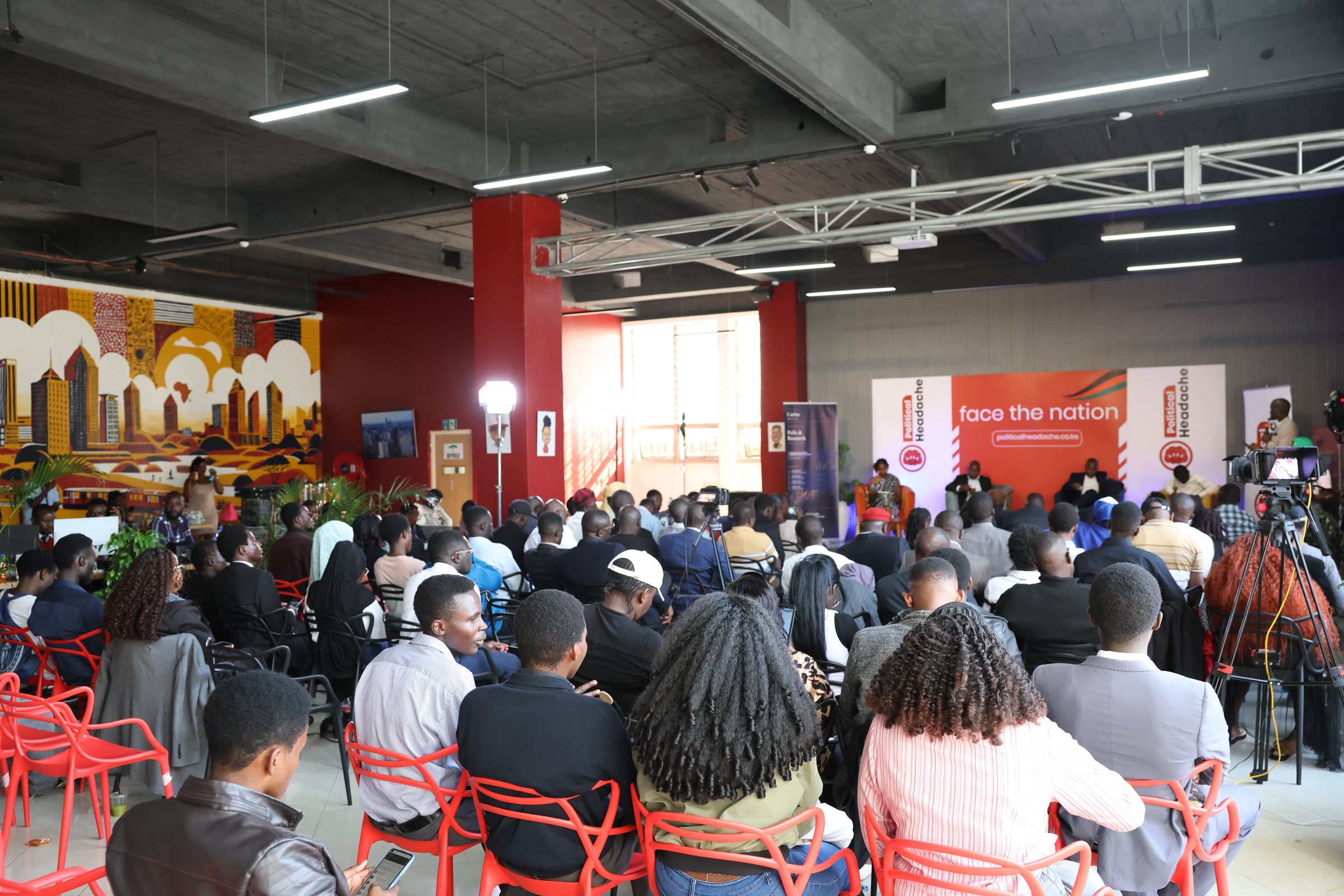
Industrial Area, Nairobi
Evidence · panels · public questions
National vision · delivery · public guarantees
Executive summary
This was not a celebration or a funeral for Vision 2030. It was a public audit of the record.
Face The Nation brought citizens, young people, public voices and policy perspectives into one room at Baraza Media Lab to examine what Vision 2030 changed—and where national ambition did not translate into everyday transformation.
The conversation moved from the record to the future. Participants considered the work, services, productive capacity, institutional strength and quality of life Kenya should guarantee over the next generation, and the delivery contract required to make those promises measurable.
“2060” served as a public working horizon for the next thirty years. The forum treated the vision beyond 2030 as a question citizens should help frame, test and keep open to scrutiny.
The central question
The room moved from national promise, to lived result, to a small set of public tests that citizens can use long after the microphones are switched off.
What the room examined
The discussion distinguished visible projects from structural change—and inspiring language from a credible delivery contract.
The forum asked what Vision 2030 changed in infrastructure, services, institutions, incomes, jobs and quality of life—and where visible activity did not become transformation.
The room tested why ambition outran delivery, examining design, financing, institutional capability, political discontinuity, corruption, coordination and external shocks.
Participants considered what Kenya should guarantee within the next generation: productive work, reliable services, strong learning, affordable mobility, safety, resilience and dignity.
The discussion explored what can create prosperity at scale—and how agriculture, manufacturing, technology, services, counties and the informal economy should fit together.
The forum examined what must be costed, measured, publicly reported and protected across elections so the next vision becomes a national commitment rather than another document.
What came out of the room
Does the vision define measurable improvements in work, income, health, learning, housing, safety and dignity?
Does it show how Kenya will raise farm productivity, industrial capacity, exports, technology adoption and formal employment?
Is every first-phase priority costed, financed and compatible with debt sustainability?
Are responsibilities, deadlines, public reporting and consequences for failure clear?
Can the plan survive elections while remaining open to evidence, citizen oversight and democratic correction?
From the room
A visual record of evidence, challenge and citizen participation at Baraza Media Lab. Select any photograph to view it in full.
01Citizens gather at Baraza Media Lab to audit Vision 2030 and look beyond it.
02The room brings different generations and lived experiences into one national conversation.
03The opening panel places national promise, delivery and public consequence side by side.
04A citizen contribution moves the national vision from policy language into lived experience.
05A question from the floor tests the arguments presented on stage.
06The microphone remains open to competing views about what Kenya should build next.
07Young participants prepare to bring their priorities into the public forum.
08A young citizen speaks to a future his generation will have to live through.
09The public asks how ambition will be converted into measurable delivery.
10Different positions meet in a moderated public exchange.
11The next generation enters the record as a participant, not a distant beneficiary.
12Raised hands show how many citizens want to question, challenge and contribute.
13The production desk carries the public conversation beyond the physical room.
14A later panel broadens the perspectives placed before the audience.
15Participants close the day with a shared portrait on the Face The Nation stage.
Face The Nation · 14 August 2026